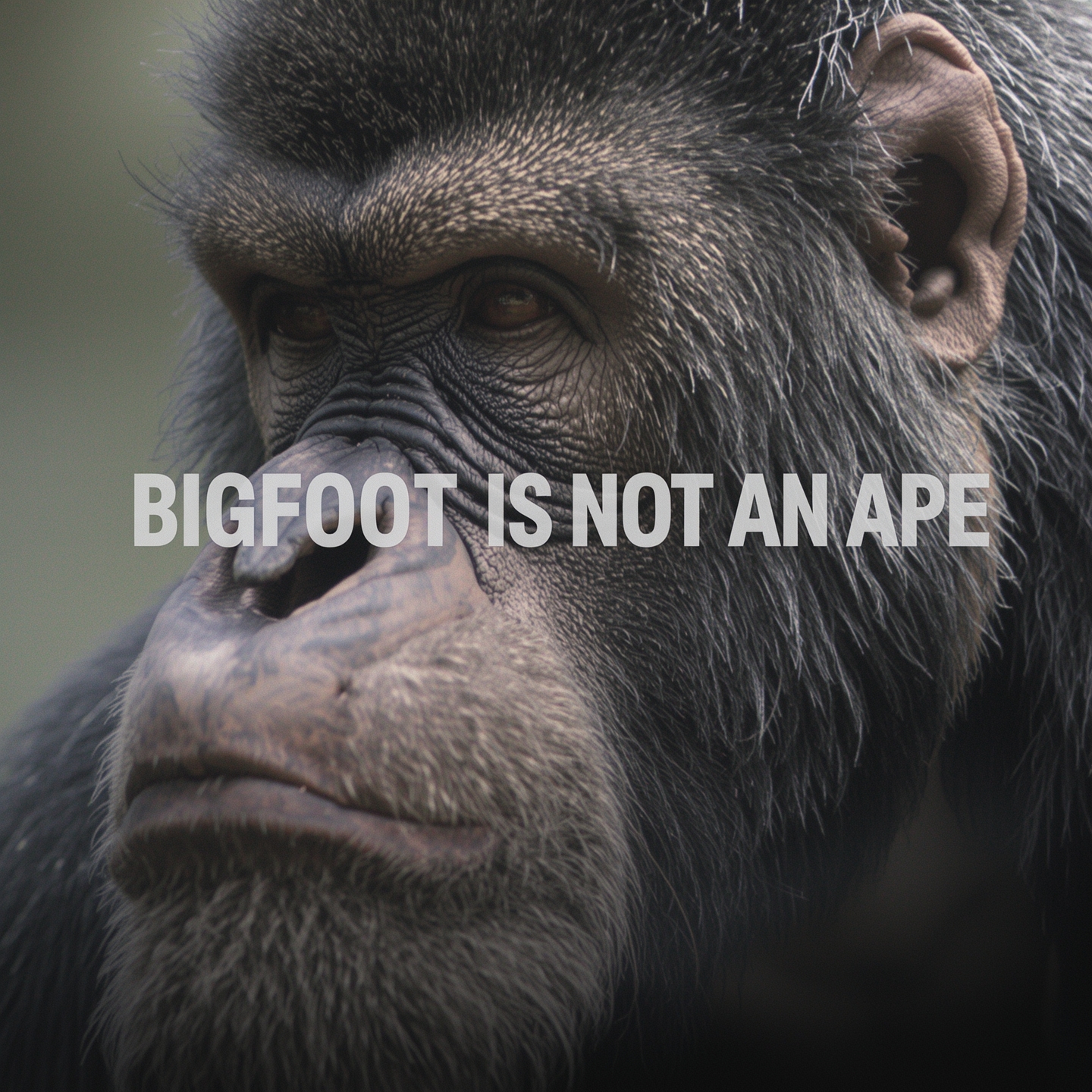

It’s time to say it clearly: Bigfoot is not an ape. The theory that Bigfoot is a surviving relic of Gigantopithecus is not just outdated—it’s misleading. It blinds researchers to the patterns that suggest Bigfoot is not an animal but a relative.
The behaviors reported in encounters—vocal mimicry, strategic rock throwing, tree-knocking in response to human activity—speak to a different kind of being. A being capable of learning, strategy, and communication.
Why Bigfoot Is Not an Ape: Rethinking the Evidence
A gorilla doesn’t silently flank your camp, imitate your speech patterns, or vanish the moment you turn on a light. An orangutan doesn’t construct hidden trails and observe humans for hours without detection. But these are exactly the traits associated with Bigfoot sightings around the world.
What’s worse, the community continues to force Bigfoot into a primate box because it makes them feel like they’re on solid scientific ground. But science is supposed to follow the evidence—not fit it into a comfortable box.
By framing Bigfoot as human-intelligent rather than ape-like, we can better understand their motives, communication strategies, and even their potential desire to avoid us.
I go deeper into this in Unmasking Bigfoot, but this blog is the beginning of a broader conversation. Bigfoot is not an ape. They’re something far closer to us—and that should change how we treat them.